
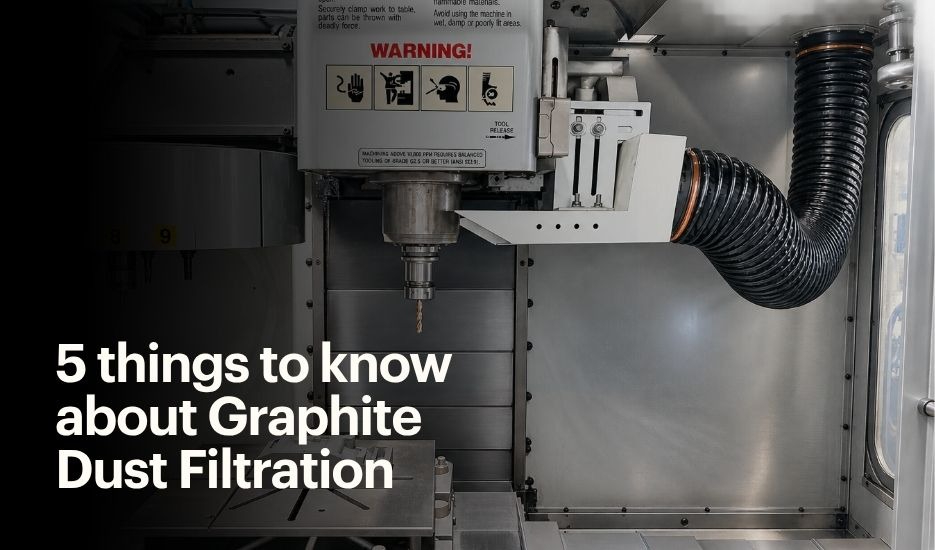
A graphite machining facility is not an ordinary workshop. It may house high-speed, 3-axis or 5-axis CNC machining center producing precision EDM electrodes, mould components, furnace parts and engineered graphite components.
These are high-value machines built for micron-level accuracy, high spindle speeds and, increasingly, automated production. Dedicated graphite machining center therefore use sealed enclosures and integrated dust management to protect accuracy and reliability.
Yet every cutting pass releases fine, dry and electrically conductive graphite dust. Managing it requires more than connecting a dust collector to the machine.
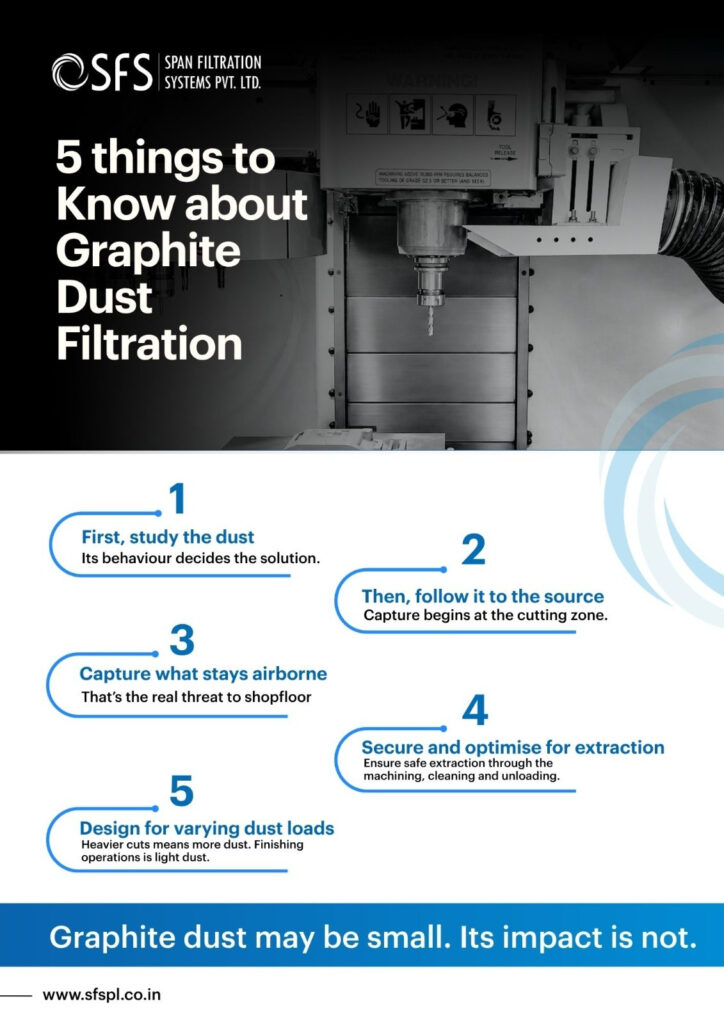
1. Dust Characteristics Must Be Studied Before Proposing a Solution
Graphite dust can behave differently depending on the machining process, particle size, temperature, and other parameters. Before proposing a filtration solution, SFS studies and evaluates the dust characteristics to determine whether the application is suitable for its dust collectors.
The right solution begins with understanding the dust not simply selecting a collector based on machine size or airflow. We recommend testing representative dust to ensure electrical and fire safety. Dust collection and disposal must also prevent conductive dust from leaking back into the production area.
2. The Dust Begins at the Cutting Zone
During high-speed milling, the tool does not produce conventional metal chips. The brittle graphite structure breaks into fine particles that can remain airborne.
Extraction must maintain sufficient suction pressure within the machining enclosure and draw dust away from the spindle, tool, and workpiece. Poorly positioned suction can leave dead zones inside the machine, even when the collector has sufficient airflow.
The first engineering question is not collector capacity. It is where the dust is generated and how it moves inside the enclosure.
3. Airborne Graphite Dust Is the Real Threat to Machine Reliability
Heavy graphite particles generally settle inside the machine due to gravity. The greater risk comes from the fine airborne dust that remains suspended and travels into areas that are difficult to clean.
It can enter:
- Spindle seals and guideways
- Tool magazines
- Sensors and measuring systems
- Control panels and electrical enclosures
- Other sensitive electronic components
Graphite is electrically conductive. When airborne dust settles inside controls and electronics, it can contribute to sensor errors, electrical faults and unexpected equipment failure.
SFS dust collectors are designed to capture this airborne graphite dust at the source before it reaches the machine’s critical systems or spreads across the shopfloor.
4. Extraction Must Follow the Complete Machining Cycle
Dust generation does not stop when the cutting tool stops. Deposits may be disturbed during tool changes, compressed-air cleaning, door opening and component unloading.
The extraction design should therefore consider:
- Machining enclosure volume
- Suction-point location
- Door-opening conditions
- Automatic tool changing
- Internal machine-cleaning practices
- Simultaneous operation of multiple machines
Stopping graphite dust extraction immediately after machining can release the remaining suspended dust when the enclosure is opened.
5. Dust Load Matters as Much as Airflow
Rough machining a large electrode produces a different dust load from finishing fine ribs or intricate cavities. A system sized only in cubic meters per hour may still suffer rapid filter loading or weak capture at the machine.
The design must balance:
- Required airflow at each machine
- Duct pressure losses
- Number of machines operating together
- Filter-media characteristics
- Dust-holding capacity
- Cleaning mechanism
- Hopper and dust-discharge capacity
- Differential-pressure monitoring
Variable extraction can be useful where machines operate intermittently, provided the required capture conditions are maintained at every active machine.
Graphite machining combines a relatively soft material with extremely high-value manufacturing equipment. The dust may appear simple, but its fineness, conductivity and behavior inside a high-speed machining center make filtration a technical part of the production process.
The right system must protect three things simultaneously: operator exposure, machine reliability and machining accuracy.
In graphite machining, filtration is not an accessory to the machine. It is a core element of what keeps the machine productive.
For more information on SFS’s Dust Extraction and Filtration System visit https://sfspl.co.in/dust-collector/