25 Years of Excellence: A Journey of Innovation, Dedication, and Enduring Success. Here's to a Quarter Century of Making a Difference!

Comprehensive range of mist collector, fume extractor, dust collector and smoke filters

Dust
Collector

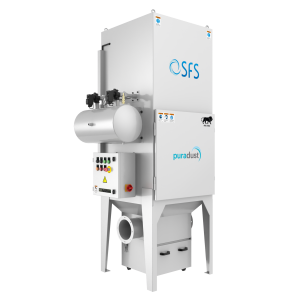
Dust Collector Machine by SFS

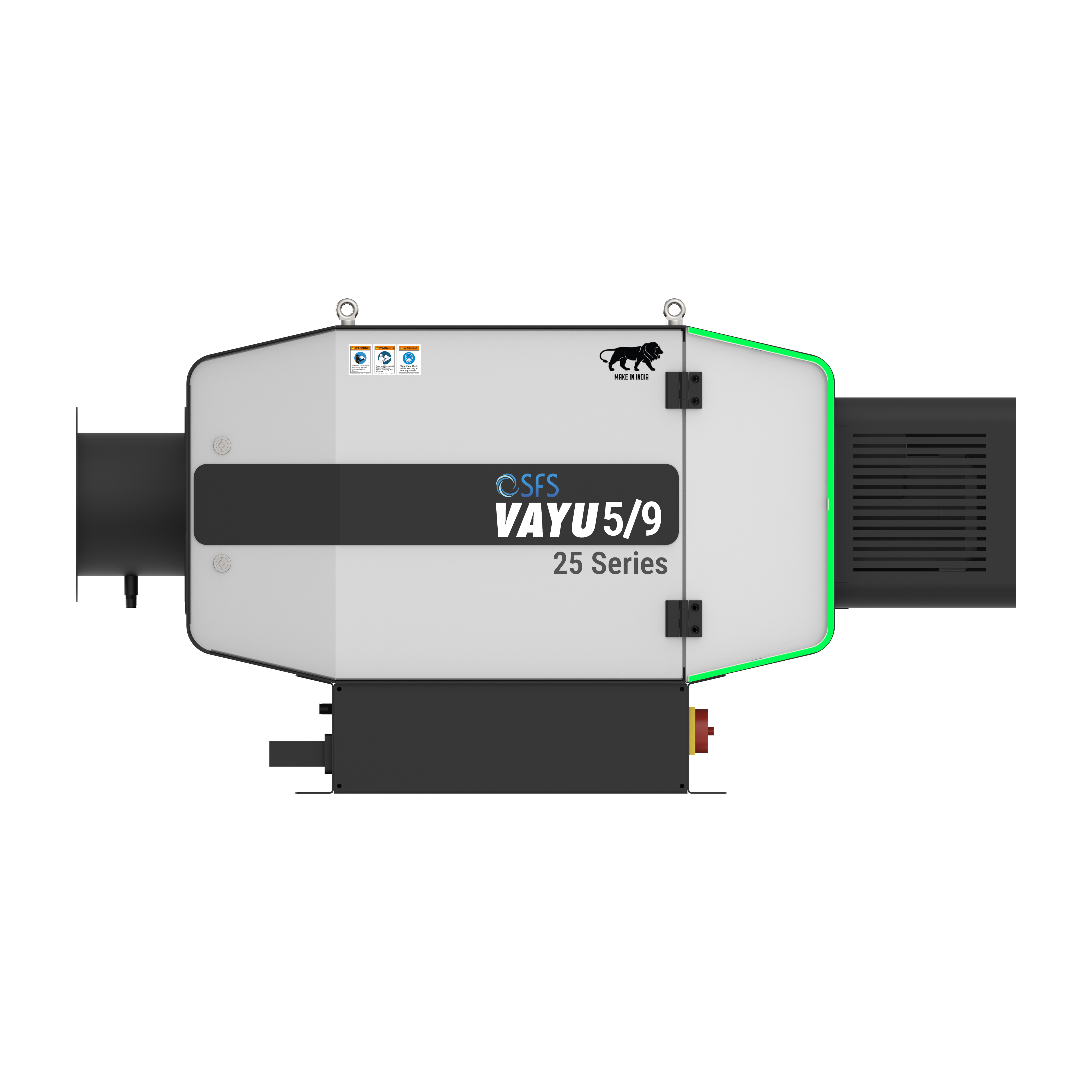
Vayu - Mist
Collector 25 Series

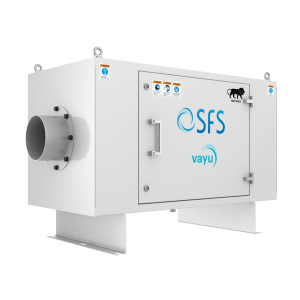
Vayu - Mist
Collector 21 Series

Oil Mist Collector for CNC Machines

vayu - Laser
Fume Extractor

laser fume extractor Left View

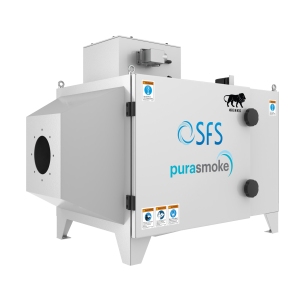
Electrostatic
Precipitator (ESP)

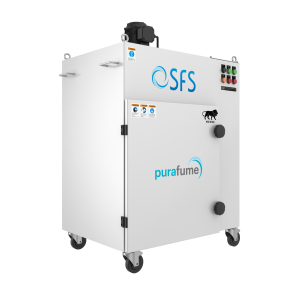
Welding Fume
Extractor

Fume extractor for welding SFS

Electrostatic
Precipitator (ESP)

Electrostatic Precipitator SFS

Welding Fume
Extractor

Fume extractor for welding SFS

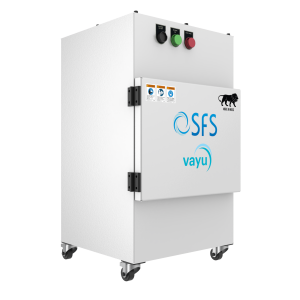
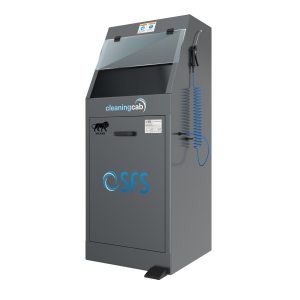
Cleaning Cabinet

Downdraft Grinding Table

Clean Air is a wise investment

SFS has pioneered a number of innovative industrial air filtration solutions for the Indian market. Learn more about the range of filtration solutions from SFS and various capabilities in the video below.

Latest Installations

sfs product overview brochure ebook cover image

Product Overview Brochure

Welding-Fumes-Filtration-e-book

Buyer’s Guide to Welding Fume Extractor (E-book)

Shwaas-e-book-cover

'Shwaas' Success Story Book

Frequently Asked Questions

What are the main benefits of industrial air filtration?

Installing the right air filtration system protects your most valuable assets: your workers’ health and your machinery. Benefits include cleaner air on the shop floor, reduced long-term health risks for employees, lower maintenance costs for equipment, improved workplace safety, and consistent product quality.


How do I know if I need a filtration system?

Visible dust or mist, surfaces that coat quickly, lingering odors or smoke and concerns about meeting workplace air quality standards are strong indicators your facility needs an air filtration solution.
Can your systems be customized for my facility?

Yes. Since every facility has unique challenges, we specialize in custom-engineered solutions. Our team can design filtration systems tailored to meet your specific air quality goals.

What is industrial mist and why is it harmful?

Industrial mist consists of tiny liquid particles (often oil or coolant) dispersed in the air during processes like CNC machining. It can be toxic and corrosive, posing health risks to workers (like respiratory irritation) and safety issues including damaging machinery by causing buildup and slippery floors.

What are the benefits of installing a mist collector?

A mist collector directly captures the mist at the source, arresting spread and ensuring effective filtration is brought about. This leads to a healthier workforce, cleaner air, reduced maintenance for machines and lower long-term operating costs.

How do I choose the right mist collector?

Key factors include the machine and process details including properties of the coolant, coolant pressure, cycle time and many more along with the type of pollutant to be filtered, the airflow rate/suction capacity and the required air quality to be attained.

How does an industrial dust collector work?

Dust collectors extract and filter air borne dust by separating dust particles using cartridge filters and return clean air to the workspace. They are essential for maintaining safe, breathable air in manufacturing.

What processes typically require fume extraction?

Processes like welding, soldering, laser cutting/engraving, plasma cutting generate hazardous fumes and smoke that require extraction at the source

Can fume extraction arms capture all contaminants at the source?

When positioned correctly, flexible fume extraction arms are highly effective at capturing fumes and smoke right at the point of generation, significantly reducing their spread into the wider workspace

What is an Electrostatic Precipitator (ESP) and how does it work?

An ESP is a filtration device that uses Ionisation principle to remove particles from the air. It imparts a charge to particles, which are then attracted to and collected on oppositely charged plates or cells.

What applications are ESPs best suited for?

ESPs are highly effective for capturing smoke, oil mist .

What factors should I consider when choosing a filtration system?

Key considerations include the type of contaminants, your facility’s layout, space availability , specific process requirements and relevant air quality as well as safety regulations required. We strongly advise the system to be optimised to ensure effective and efficient working.

Subscribe Now